

Best Ayurvedic Clinic in Thane for Holistic Healing: Profile of Dr. Sagar Narkhede and His Clinic.

In today’s fast-paced lifestyle, more people are turning to natural and time-tested healing systems for sustainable wellness. Ayurveda, with its holistic approach, offers deep-rooted healing that addresses the mind, body, and spirit. For those looking for the best Ayurvedic clinic in Thane, Dr. Narkhede Ayurved and Panchakarma Clinic, led by Dr. Sagar Narkhede, stands out as one of the most trusted destinations for authentic and result-oriented Ayurvedic healing.


Why This Clinic Represents True Holistic Healing

Backed by more than 15 years of clinical experience, Dr. Sagar Narkhede (MD – Ayurveda) leads a highly respected practice known for its classical treatment protocols and patient-focused, natural healing methods. The clinic is ISO 9001:2015 certified, reflecting its high standards in Ayurvedic treatment, safety, and patient care.


Dr.Sagar Narkhede 

Special highlights of Dr. Narkhede’s practice include:

  • Authentic Panchakarma Therapies
    Traditional detoxification and rejuvenation procedures performed under expert supervision.

  • Pulse Diagnosis (Nadi Parikshan)
    An advanced Ayurvedic diagnostic method to assess dosha imbalance at a deep level.

  • Herbal & Rasayana Treatments
    Purely herbal medicines following classical Ayurvedic formulations.

  • Root-Cause Treatment Approach
    Focus on sustainable healing rather than symptomatic relief.


Conditions Treated at the Clinic

The clinic provides comprehensive Ayurvedic solutions for a wide range of chronic and lifestyle-related issues, including:

  • Infertility (male & female)

  • Arthritis and joint disorders

  • Digestive & metabolic disorders

  • Hair and skin diseases

  • Stress and sleep-related problems

  • Detoxification & rejuvenation therapies

  • Hormonal imbalances

  • Respiratory and allergic conditions

Every treatment plan is personalized based on the patient’s dosha constitution, lifestyle, stress factors, and digestive strength (Agni).


Ayurvedic View of Health: Harmony of Doshas, Agni & Mind

According to Ayurveda, true health is achieved when:

  • The three doshas—Vata, Pitta, Kapha—function in balance

  • Agni (digestive fire) works efficiently

  • Dhatus (body tissues) remain nourished

  • Ama (toxins) are minimized

  • Mind, senses, and emotions remain stable

Modern lifestyle habits—stress, irregular routines, processed foods, late nights—can disturb doshic balance and weaken Agni. Dr. Narkhede’s clinic focuses on restoring this balance through:

  • Panchakarma detox

  • Herbal medicines

  • Lifestyle modifications

  • Diet correction

  • Stress management

  • Pulse-based personalized guidance


Simple Daily Ayurvedic Tips for Better Balance

You can incorporate these at home:

1. Follow Dinacharya (Daily Routine)

  • Begin your day with warm water or herbal tea

  • Light stretching or yoga to calm Vata

  • Eat meals at regular times

2. Follow Ritucharya (Seasonal Routines)

  • Warm, nourishing foods in winter

  • Light, cooling foods in summer

  • Use seasonal herbs for immunity

3. Support Digestion

  • Add ginger, cumin, coriander, black pepper

  • Avoid late-night or heavy meals

  • Include herbal teas

4. Manage Stress

  • Practice pranayama

  • Try grounding techniques like foot massages

  • Ensure adequate sleep

These steps help maintain doshic balance and prevent the formation of ama (toxins).


When Should You Seek Professional Ayurvedic Care?

While home practices help maintain health, complex or chronic issues require deeper evaluation. Consult an Ayurvedic expert if you experience:

  • Chronic digestive issues

  • Fertility concerns

  • Hormonal irregularities

  • Persistent joint pain

  • Skin or hair disorders

  • Emotional or stress imbalance

Dr. Narkhede’s clinic provides detailed consultation, pulse diagnosis, and classical Panchakarma designed to target the root cause safely and effectively.


About Dr. Sagar Narkhede and His Clinic

Dr. Sagar Narkhede, MD (Ayurveda)

  • Specialist in Panchakarma and Nadi Parikshan

  • 15+ years of experience

  • ISO 9001:2015 certified clinic

  • Known for authentic, traditional, and result-oriented Ayurvedic healing

Clinic Address:

Dr. Narkhede Ayurved and Panchakarma Clinic
03, C-1 Aster, Sai Baba Vihar Complex,
Near Muchhala College, Anand Nagar,
Ghodbunder Road, Thane (West), Maharashtra 400615

The clinic uses 100% herbal medicines, time-tested Panchakarma therapies, and customized treatment plans for long-term, root-cause healing.


Disclaimer

This article is for educational purposes only and does not replace professional medical advice. Always consult a qualified Ayurvedic physician before beginning any treatment, especially for chronic or serious conditions.


For holistic healing that blends ancient wisdom with personalized care, Dr. Narkhede Ayurved and Panchakarma Clinic is one of the most reputable Ayurvedic clinics in Thane. With an emphasis on natural therapies, doshic balance, digestive strength, and lifestyle correction, this clinic offers a complete path toward sustainable wellness and renewed vitality.


Visit Clinic Website →

Ayurvedic Doctors for Infertility in Thane.

Dr. Sagar Narkhede

MD (Ayurveda) — Panchakarma & Nadi Parikshan Specialist
Thane (West), Maharashtra

Dr. Sagar Narkhede is a reputed Ayurvedic physician with over 15 years of clinical experience. He leads the ISO 9001:2015 certified Dr. Narkhede Ayurved & Panchakarma Specialty Clinic in Anand Nagar, Ghodbunder Road, Thane (W).

His approach integrates classical Ayurveda, Panchakarma therapies, and modern diagnostics, especially for infertility, metabolic disorders, arthritis, digestive issues and stress-related conditions.


Male Infertility: Ayurvedic Treatments Offered in Thane

Male infertility is a significant and often overlooked factor when couples face difficulty conceiving. At Dr. Narkhede’s clinic, personalised Ayurvedic care helps improve sperm health, hormonal balance and vitality.


1. Ayurvedic view of male infertility

Ayurveda explains male fertility through the health of Shukra dhatu (reproductive tissue), balanced doshas, good digestion (Agni) and absence of toxins (Ama).
Imbalances caused by stress, heat exposure, lifestyle errors, poor diet or chronic illness may reduce sperm count, motility or morphology.

Treatment focuses on:

  • Removing toxins

  • Strengthening reproductive tissue

  • Improving digestion

  • Restoring systemic balance


2. Initial Assessment at the Clinic

The evaluation generally includes:

  • Detailed medical and lifestyle history

  • Semen analysis, hormone tests (FSH, LH, Testosterone, TSH), scans if required

  • Nadi Parikshan (pulse examination)

  • Diet, sleep, stress and occupational exposure review


3. Core Ayurvedic Treatments Offered

a) Panchakarma Detox

Used when deeper imbalance or toxin accumulation is present.
Includes:

  • Snehana (oleation)

  • Swedana (fomentation)

  • Basti (medicated enemas)

  • Virechana (therapeutic purgation)

This helps purify the body, improve metabolism and create a fertile internal environment.

b) Rasayana (Rejuvenation)

Strengthens tissues and improves sperm quality.
Common ingredients (physician-guided only):

  • Ashwagandha

  • Gokshura

  • Shatavari (when indicated)

  • Classical rasayanas

c) External Therapies

  • Abhyanga (therapeutic oil massage)

  • Warm fomentation

  • Medicated oil applications for local circulation support

d) Internal Herbal Medicines

Tailored formulations to improve:

  • Sperm count

  • Motility

  • Hormonal functioning

  • Overall vitality


4. Targeted Plans for Common Male Fertility Issues

  • Low sperm count: Panchakarma + Rasayana for 3–4 months

  • Poor motility: Circulation-improving therapies and specialised herbs

  • Oxidative stress: Antioxidant rasayanas + diet correction

  • Hormonal imbalance: Ayurveda with coordinated lab tracking


5. Diet & Lifestyle Recommendations

  • Warm, nourishing meals (ghee, milk tonics, seasonal vegetables)

  • Avoid heat exposure, tight clothing, hot baths

  • Avoid alcohol, smoking, excessive caffeine

  • Daily Abhyanga (oil massage)

  • Stress reduction: pranayama & sleep hygiene


6. Treatment Timeline

Sperm regeneration takes 72–90 days.
Most patients follow:

  • A 3-month foundational plan

  • Panchakarma block (when required)

  • Rasayana therapy afterwards

Visible improvement is often evaluated after 3 months.


7. Safety & Tests

  • Bring past reports (semen analysis, hormones, scans).

  • Inform the doctor about any ongoing IVF/IUI treatment.

  • Do not take fertility herbs without supervision.


8. Integrating Ayurveda with Modern Fertility Care

Ayurveda improves systemic health, reduces toxins, and enhances reproductive potential.
It works well along with modern infertility treatments (IVF/IUI), especially for preparation and long-term strengthening.


9. Case Example (Anonymous)

A 34-year-old male with poor sperm motility completed 12 weeks of:

  • Dietary correction

  • Daily Abhyanga

  • Panchakarma (including Basti)

  • Rasayana therapy

His motility improved significantly at 3 months, helping the couple continue natural conception attempts. Results vary depending on many factors.


10. Book a Male Fertility Consultation

If you’re concerned about male fertility, early evaluation is essential.
The clinic provides stepwise plans based on your reports, constitution, and goals.

Contact:
ЁЯУЮ +91 90046 16617
ЁЯТм WhatsApp: https://wa.me/919004616617
ЁЯМР Website: www.narkhedeayurved.com

Clinic Address:
03, C-1 Aster, Sai Baba Vihar Complex,
Near Muchhala College, Anand Nagar,
Ghodbunder Road, Thane (W), Maharashtra 400615.


Areas of Expertise

  • Male & Female Infertility

  • Arthritis & Joint Disorders

  • Digestive & Metabolic Disorders

  • Panchakarma Detox Therapy

  • Nadi Parikshan

  • Skin & Hair Disorders

  • Lifestyle & Stress Management


Disclaimer

This article offers general insights into Ayurvedic management of infertility and is not a replacement for individual medical consultation. Always consult a qualified Ayurvedic physician before beginning any treatment.

Male Infertility: Ayurvedic Treatments Offered in Thane.

Dr. Sagar Narkhede

MD (Ayurveda) — Panchakarma & Nadi Parikshan Specialist
Thane (West), Maharashtra

Dr. Sagar Narkhede is a reputed Ayurvedic physician in Thane (W) with over 15 years of clinical experience. He leads the ISO 9001:2015 certified Dr. Narkhede Ayurved & Panchakarma Specialty Clinic, providing authentic Panchakarma therapies and classical Ayurvedic management for chronic and lifestyle conditions.

He is known for evidence-informed Ayurvedic care in infertility, arthritis, digestive and metabolic disorders, and stress-related conditions — combining traditional pulse diagnosis (Nadi Parikshan) with modern clinical insight.


Male Infertility: Ayurvedic Treatments Offered in Thane

Male infertility is a significant and often under-discussed contributor to couples' difficulties conceiving. At Dr. Narkhede Ayurved & Panchakarma Specialty Clinic in Thane, classical Ayurveda—combined with careful clinical evaluation—offers safe, personalised approaches to improve semen quality, hormonal balance and reproductive health. Here’s what to expect from evidence-informed Ayurvedic care.

  1. Understanding male infertility from an Ayurvedic perspective
    Ayurveda views male fertility as dependent on healthy Shukra (reproductive tissue), balanced Doshas (especially Vata and Pitta), proper digestion (Agni) and absence of Ama (toxins). Lifestyle factors, stress, heat, poor diet and chronic illness may weaken Shukra and reduce sperm count, motility and morphology. Treatment aims to clear toxins, strengthen tissues and restore systemic balance.

  2. Initial assessment at the clinic
    • Detailed history: past illnesses, surgeries, medications, sexual history, occupational exposures and lifestyle.
    • Reports review: semen analysis, hormonal profile (TSH, testosterone, FSH, LH), ultrasound reports if available.
    • Nadi Parikshan (pulse diagnosis): helps identify underlying doshic imbalances and systemic patterns.
    • Diet & lifestyle audit: sleep, alcohol/caffeine use, exercise, stress and workplace heat exposure.

  3. Core Ayurvedic treatments offered

a) Panchakarma & Shodhana (detoxification)
A supervised Panchakarma block is often central — especially when chronic Ama or systemic imbalance is present. Protocols may include preparatory therapies (snehana & swedana), followed by procedures such as Virechana (therapeutic purgation) or Basti (medicated enemas). Panchakarma helps reduce toxins, regulate metabolism and create a fertile internal environment.

b) Rasayana & Shukra-boosting therapies
Rasayana (rejuvenative) formulations strengthen tissues and improve vitality. Physician-prescribed tonic regimens—often containing classical ingredients—are tailored to the patient’s constitution to improve sperm count, motility and overall reproductive resilience.

c) External therapies & local care
External care such as Abhyanga (therapeutic oil massage), warm fomentation, and medicated oil applications can improve scrotal circulation and reduce local inflammation. These are delivered using classical oils and techniques adapted to the individual.

d) Internal herbal formulations
Commonly used herbs and formulations (only under physician supervision) include Ashwagandha, Gokshura, Shatavari (where indicated), and classical polyherbal rasayanas. The choice and dose depend on semen analysis, underlying causes, and co-existing health conditions.

  1. Targeted plans for common male infertility issues
    • Low sperm count: detox (Panchakarma) + Rasayana + targeted tonics over 3–4 months.
    • Poor motility: circulation-improving external therapies, antioxidants and specific herbal regimens.
    • High oxidative stress: antioxidant-rich Rasayanas, dietary changes and lifestyle modifications.
    • Hormonal imbalance: combined management with labs monitored; Ayurveda supports endocrine balance while coordinating with endocrinologists if needed.

  2. Diet, lifestyle & home practices
    Positive changes at home significantly boost treatment success. Key recommendations commonly advised at the clinic:

  1. Eat nourishing, warm, easily-digestible food: whole grains, cooked seasonal vegetables, ghee in moderation and milk-based tonics where tolerated.

  2. Avoid heat & tight clothing: reduce laptop-on-lap time, hot baths and tight undergarments that raise scrotal temperature.

  3. Limit alcohol, tobacco & excessive caffeine: these reduce sperm quality.

  4. Daily Abhyanga: a gentle warm oil self-massage improves circulation and relaxation.

  5. Stress management: short pranayama, guided breathing and sleep hygiene to reduce Vata-driven stress effects.

  1. Typical timeline & expectations
    Sperm production cycles take approximately 72–90 days. Patients often follow a 3-month baseline plan (diet, medicines, lifestyle changes) and—when indicated—a Panchakarma block (2–4 weeks) followed by Rasayana. Measurable improvements in semen parameters are usually assessed at 3 months, with further gains over 6 months depending on cause and adherence.

  2. Safety, coordination & tests
    • Always bring prior semen reports and hormonal tests for review.
    • If you’re on prescription drugs or undergoing ART (IVF/IUI), inform both teams — the clinic coordinates care with fertility specialists and endocrinologists when needed.
    • Panchakarma and internal herbs must be supervised by a qualified physician; do not self-prescribe.

  3. Integrative approach — Ayurveda with modern fertility care
    Many couples benefit most from an integrative pathway: Ayurveda to detoxify, stabilise metabolism and improve tissue health plus modern reproductive medicine for targeted interventions where required. The clinic supports patients preparing for ART (IVF/IUI) and recommends clear communication between teams.

  4. Case vignette (anonymised)
    A 34-year-old man with low sperm motility (asthenozoospermia) followed a 12-week plan: dietary correction, daily Abhyanga, a supervised Panchakarma block (including Basti), and a tailored Rasayana. At 3 months his motility improved notably and the couple proceeded with timed conception attempts with better outcomes. (Individual results vary.)

  5. Book a personalised male fertility consultation in Thane
    If you’re concerned about male fertility, a careful evaluation is the first step. The clinic reviews your reports, performs Nadi Parikshan, and crafts stepwise plans combining diet, medicines and Panchakarma where needed.

Contact: +91 90046 16617
WhatsApp: https://wa.me/919004616617
Clinic: Dr. Narkhede Ayurved & Panchakarma Specialty Clinic, Anand Nagar, Ghodbunder Road, Thane (W).

Areas of expertise
• Infertility (Male & Female) Treatment
• Arthritis & Joint Disorders
• Digestive & Metabolic Disorders
• Panchakarma Detox Therapy
• Nadi Parikshan (Pulse Diagnosis)
• Skin & Hair Disorders
• Lifestyle & Stress Management

Disclaimer
This article provides general information about Ayurvedic care and is not a substitute for individual medical evaluation. Tests and personalised consultation are needed to design a safe treatment plan.

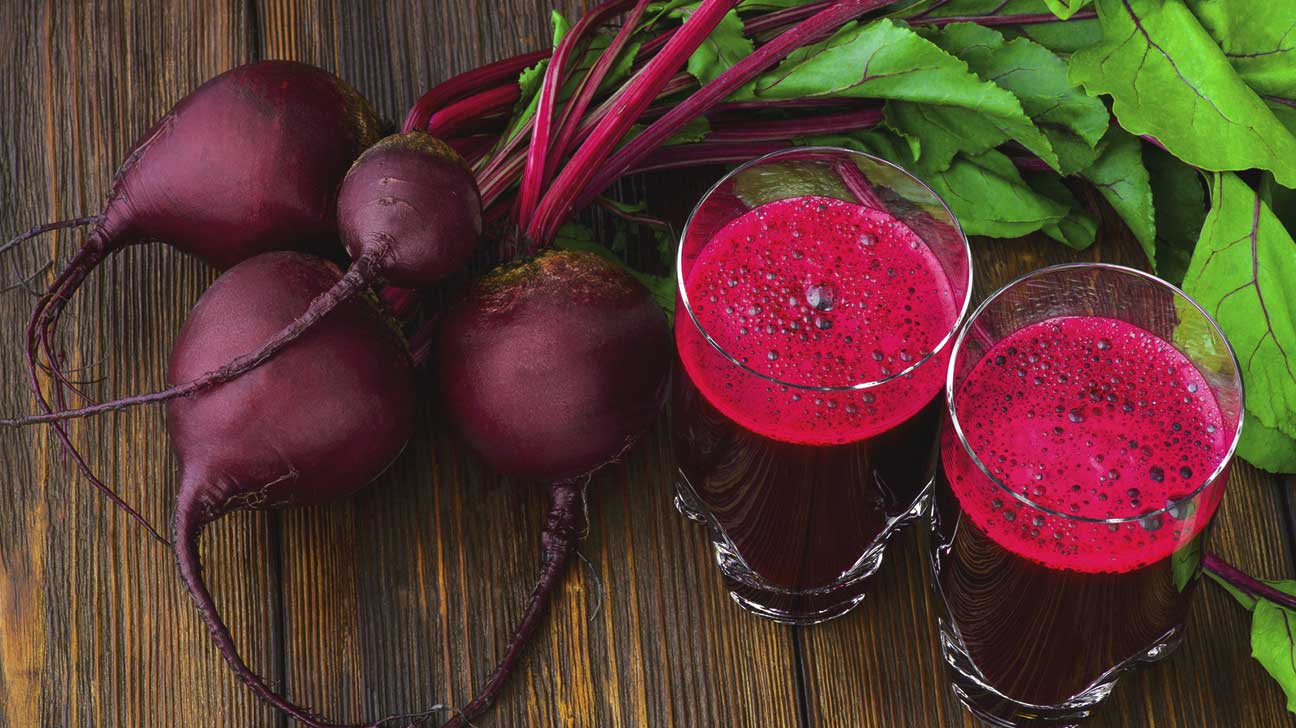
Beetroot is a natural heart protector, circulation booster, and winter wellness enhancer.


Beetroot for Winter Heart Health & Better Circulation

Ayurvedic Tips • Source: AyurvedaInitiative.com

Beetroot juice benefits for winter heart health

Why Beetroot is a Winter Superfood

Beetroot is packed with natural nitrates that turn into nitric oxide in your body. This helps relax blood vessels, improve blood flow, and lower blood pressure. In winter, when circulation slows and the heart works harder, beetroot can give your body a powerful boost.

Ayurvedic wisdom recommends foods that support warmth, circulation, and heart vitality during colder months. Beetroot naturally fulfills all three — making it one of the most beneficial winter-friendly foods for your body.

Key Benefits at a Glance

  • Improves circulation: Helps maintain smooth blood flow in winter.
  • Relaxes blood vessels: Nitric oxide supports healthy arterial function.
  • Lowers blood pressure: Supports heart health naturally.
  • Boosts stamina: Enhances oxygen delivery to muscles and tissues.
  • Supports winter metabolism: Helps keep the body warm and energized.

How to Use Beetroot in Winter (Ayurvedic Way)

  • Warm beetroot soup with ginger and black pepper.
  • Beetroot sabzi cooked with ghee and mild spices.
  • Beetroot juice (room temperature, not cold) in moderation.
  • Steam-cooked beetroot added to winter salads.
  • Beetroot halwa as a nourishing seasonal treat.

Conclusion

Beetroot is more than just a vibrant vegetable — it is a natural heart protector, circulation booster, and winter wellness enhancer. Adding beetroot to your seasonal diet can help keep your heart strong and your energy steady through the cold months.

Source: www.ayurvedainitiative.com

Ayurveda Initiative — Ancient wisdom for modern wellness.

Chia Seeds for Winter: Heart, Circulation & Immunity Boost.

Chia Seeds for Winter: Heart, Circulation & Immunity Boost

Ayurveda Tips • Source: AyurvedaInitiative.com

Chia seeds — tiny nutrition powerhouses recommended in Ayurveda-friendly diets.


Why chia seeds matter this winter

Chia seeds promote heart health, enhance blood circulation, and reduce inflammation. Their antioxidants protect against oxidative stress during winter, helping to boost immunity so your body is better prepared to fight seasonal illnesses. Rich in calcium, chia seeds support bone health too — making them a great small-but-mighty addition to a seasonal Ayurvedic diet.

Key benefits at a glance

  • Heart health: Omega-3s and fiber in chia support cardiovascular function and healthy cholesterol balance.
  • Improved circulation: Nutrients in chia help maintain healthy blood flow.
  • Anti-inflammatory & antioxidant: Compounds that reduce inflammation and protect cells from winter oxidative stress.
  • Immune support: Antioxidant protection helps the immune system resist seasonal illnesses.
  • Bone health: A good plant-based source of calcium and minerals supporting skeletal strength.

How to include chia seeds the Ayurvedic way

Follow these simple, warming-friendly ideas to enjoy chia seeds while keeping with Ayurvedic principles for winter:

  1. Chia & warm milk porridge: Soak 1–2 tbsp chia in warm milk (dairy or plant-based) for 10–15 minutes. Add a pinch of cinnamon and cardamom to enhance digestion and warmth.
  2. Golden chia pudding: Mix chia seeds with warm turmeric-spiced milk, a touch of jaggery or honey (once cooled) and nuts for texture.
  3. Use as an egg substitute: Mix 1 tbsp chia + 3 tbsp warm water to bind baked goods with healthier fats and fiber.
  4. Smoothie booster: Add a tablespoon of pre-soaked chia to warm fruit smoothies or almond milk blends — avoid ice cold drinks in winter per Ayurvedic guidance.
  5. Sprinkle on cooked grains: Toss toasted chia over warm khichdi, porridge or cooked millets for extra nutrition and crunchy texture.

Safety & simple dosage

A typical serving is 1–2 tablespoons per day when soaked. Chia absorbs liquid and expands — always pre-soak or add to a moist food to avoid throat discomfort. If you have specific medical conditions (blood-thinning medication, swallowing difficulties, or allergies), consult your healthcare provider before adding large amounts of chia seeds to your diet.

Conclusion

Small and versatile, chia seeds are a winter-friendly superfood that support heart health, circulation, inflammation control, immunity, and bones. When used thoughtfully — warmed, soaked, and paired with digestive spices — they fit beautifully into Ayurvedic seasonal eating and help keep you resilient through the colder months.

Ayurveda Initiative — Ancient wisdom for modern seasonal wellness.

Source: www.ayurvedainitiative.com

Posted under: Ayurveda Tips

Herbal Solutions for Sexual Disorders in Thane – Shree Ayurved and Panchkarma Chikitsalaya.

Herbal Solutions for Sexual Disorders in Thane

Welcome to Shree Ayurved and Panchkarma Chikitsalaya

The Ayurvedic clinic of Dr. Kaustubh Bhure, offering holistic and 

herbal solutions for sexual disorders and related health issues through authentic Ayurveda.


About the Ayurvedic Clinic

Clinic Name: Shree Ayurved and Panchkarma Chikitsalaya
Consulting Ayurvedic Doctor: Dr. Kaustubh Bhure

Thane OPD

Address:
304, Shivneri Building,
Opp. Gaondevi Maidan,
Near Thane Railway Station, Naupada,
Thane (West)

Find us on Google:
https://maps.app.goo.gl/xbYZ7

Pune OPD

Address:
C/o Ojas Clinic, Shop No. 9, Balwant Niwas,
Bhikardas Maruti Road,
Opp. Prasad Prakashan, Besides Scout Ground,
Sadashiv Peth, Pune 411030
Availability: Every Second and Fourth Sunday with prior appointment

Find us on Google:
https://g.co/kgs/d6U2hS

New Clinic Coming Soon

Very soon opening at Dadar.

Treatments and Approach

We treat all kinds of diseases in an Ayurvedic way with a focus on root-cause healing, 

including herbal and Panchakarma-based solutions for sexual health disorders, 

reproductive wellness, and overall vitality.

Website and Online Booking

Official Website:
www.shreeayurved.com

Book appointment at discounted rates:
http://shreeayurved.com/product/book-an-appointment/

Connect with Us Online

YouTube:
Subscribe to our YouTube channel

Facebook:
https://Facebook.com/shreeayurved

Instagram:
https://instgram.com/drkaustubhbhure

Twitter:
https://Twitter.com/drkaustubhbhure

Contact Details


Dr. Kaustubh Bhure

Phone: 02266098148.

Swastha Matrutva — Garbhasanskar in Thane.

gold mandala
Swastha Matrutva — Garbhasanskar
Baby Talking Before Birth: A spiritual bonding • Swastha Ayurved Programs

Baby Talking Before Birth: A Spiritual Bonding

When Riya was five months pregnant, she started a little ritual. Every night before bed, she would gently place her hands on her growing bump and say, “Hi baby, how was your day in there?” At first, she felt a little silly talking to someone who hadn’t even been born yet. But slowly, it became her favorite part of the day.

One evening, after a long day at work, she read a poem aloud. Midway through, she felt a tiny kick – as if her baby was clapping in approval. Her husband laughed, bent down, and said, “Hey champ, that was Daddy’s joke earlier. Did you hear it too?” The baby kicked again. It felt magical, almost like the first family conversation had just taken place.

Pregnant mother bonding with baby - Swastha Matrutva

The Science Behind the Magic

By the second trimester, babies begin to hear sounds from the outside world. The mother’s voice, in particular, is a familiar melody they carry into life after birth. That’s why newborns often turn toward their mother’s voice instantly — it’s the very first sound they’ve known.

Why Baby Talking (and Music) Matters

  • Bonding Before Birth: When parents speak, sing, or hum, babies respond. Kicks, stretches, and flips often become little replies from the womb.
  • Language Roots: Babies begin recognizing speech rhythms before birth.
  • Calm & Comfort: A mother’s voice naturally soothes both the unborn baby and the mother.
  • Emotional Healing: Talking to the unborn child turns anxieties into connection and hope.

The Role of Classical Music

Riya played soft classical music—sometimes Mozart, sometimes soothing Indian ragas. Her baby’s movements often slowed down, as if listening peacefully.

Classical music doesn't make babies smarter instantly, but it reduces maternal stress and creates a serene environment for the growing baby.

Think of it as sound therapy: your heartbeat, your voice, and the melodies you play become your baby's first playlist.

Creating Your Own Ritual

Your ritual doesn’t need to be perfect. Talk about your day, hum a tune, read a bedtime story or simply whisper affirmations. Combined with soft classical music, these moments create deep emotional bonding.

From Womb to World

When Riya’s baby was born and heard her whisper “Hello, my love,” the newborn turned towards her and calmed instantly. Later, listening to the same raga soothed the baby, as if recognizing an old friend.

Baby talking and music during pregnancy aren’t just preparation—they remind us that love begins long before the first breath.


Every word you speak, every note you play, is a memory your baby carries into tomorrow.

From: Swastha Matrutva Garbhasanskar program
Suggested Labels:
Swastha Matrutva Garbhasanskar Pregnancy Baby Bonding Classical Music
Leave a Comment / Share Your Ritual

Share what you say to your baby, songs you play, or simple rituals that brought calm during pregnancy. (For personalized guidance, consult your Ayurvedic practitioner.)

Best Ayurvedic Tips to Cure Anal Fissure Naturally In Thane.

gold mandala
Ayurveda Initiative
Disease Detail • Natural & Traditional Ayurveda

Best Ayurvedic Tips to Cure Anal Fissure Naturally

From Dr Kaustubh Bhure — Shree Ayurveda and Panchakarma Chikitsalaya • Thane & Pune OPD
Contact: 99675 15991
Ayurvedic treatment

Anal fissure is a common yet painful condition often caused by chronic constipation, hard stool, or prolonged sitting. Ayurveda offers gentle, effective, root-level methods that promote natural healing and prevent recurrence — often avoiding the need for surgery.

At Dr. Bhure’s Shree Ayurveda and Panchakarma Chikitsalaya we follow a holistic approach that heals the fissure and restores digestive balance. Below are safe, practitioner-recommended tips.

ЁЯМ╕ Ayurvedic Tips to Heal Anal Fissure

  • Use Jatyadi Tailam: Dip a clean cotton tampon in Jatyadi Tailam and gently keep it in the anus each night. Promotes wound healing, reduces pain and prevents infection. Maintain hygiene.
  • Sitz Bath (Warm Water): Sit in warm water for 10–15 minutes twice daily — relaxes anal muscles, improves circulation and speeds healing.
  • Kegel Exercises: Strengthen pelvic-floor muscles to enhance local blood flow and support tissue healing.
  • Keep Bowels Clean: Avoid constipation with fiber-rich foods, warm water, and (if suitable) a teaspoon of ghee. Ayurvedic digestive aids (as advised by your practitioner) and regular habits prevent straining.
  • Adopt an Ayurvedic Lifestyle: Proper sleep, balanced diet, gentle yoga, and periodic detox (under supervision) support digestive fire (Agni) and help prevent recurrence.

ЁЯМ┐ Ayurvedic Treatment for Anal Fissure

We provide personalized Ayurvedic medicines and Panchakarma therapies for anorectal conditions (piles, fissure, fistula). Treatments include medicated oils, sitz therapies, dietary and lifestyle plans tailored to your constitution.

Clinic & Contact Details

Thane OPD
304, Shivneri Building, 3rd Floor, Opp. Gaondevi Maidan, Naupada, Thane West, Thane, Maharashtra 400601
Contact: 99675 15991 / 02266098148
Time: 10am to 8pm
Pune OPD (2nd & 4th Sunday)
C/o Ojas Clinic, Shop No.9, Balwant Niwas, Bhikardas Maruti Road, Opp. Prasad Prakashan, Sadashiv Peth, Pune 411030
Contact: 99675 15991 / 02266098148
Time: 10am to 8pm

Important: These are general Ayurvedic measures. For personalized medicines, dosages and Panchakarma, consult an Ayurvedic physician—especially if you have diabetes, are pregnant, or have other health conditions.

Source: ShreeAyurved.com

Suggested Labels: Anal Fissure Anorectal Diseases Panchakarma Home Remedies
Leave a Comment / Disease Detail

Have questions? Share age, bowel habits and symptom duration for general guidance. For prescriptions and diagnosis please visit the clinic.

Healing Through Meditation: A Journey Back to Yourself.

Slow Down, Breathe Deeply, and Reconnect with Inner Peace

In a world that moves fast and demands more each day, the simple act of pausing can become healing. Meditation is not just a practice—it is a return home, a soft space where your mind, body, and spirit realign. When we take a moment to step outside, admire the sky, or breathe in the scent of blooming flowers, we begin the journey of self-restoration.


Why Meditation Heals

Meditation brings clarity to the mind, reduces unnecessary mental clutter, and strengthens emotional stability. It allows the nervous system to relax, slows the heart rate, and creates a natural balance within the body. According to Ayurvedic wisdom, stillness restores prana—the life force—helping you feel lighter, calmer, and more centered.

Simple Practices to Begin Your Healing

  • Mindful Breathing: Sit comfortably, close your eyes, and take long, slow breaths. Let your body melt into the moment.
  • Nature Pause: Step outside for a few minutes. Look at the sky. Feel the breeze. Let nature hold you.
  • Affirmation Meditation: Repeat a calming affirmation such as “I am safe,” “I am grounded,” or “I release all tension.”
  • Body Scan: Guide your awareness from your head to your toes, noticing sensations without judgment.

Healing as a Daily Ritual

The real magic of meditation lies in consistency. Even a few minutes each day can transform your mental rhythm. Over time, you begin to respond rather than react, observe rather than overthink, and live from a place of ease rather than pressure.

 Come Back to Yourself.

Healing begins when you give yourself permission to slow down. Meditation softens the edges of life, restores your clarity, and awakens the deeper wisdom within you. Each breath you take is a reminder that peace is already inside you—waiting to be rediscovered.

Let every moment of stillness guide you gently toward a healthier, more mindful, and spiritually aligned life.

“Breathe. Heal. Transform.”

Source: www.ayurvedainitiative.com

Meditate, Transform, Evolve – Embrace your healing through Ayurveda and Mindfulness.


Healing Through Meditation: Embracing Grief and Sadness

It's OK to be Sad and to Grieve When Things Don’t Go as You Hoped

Grief and sadness are natural responses when life doesn’t follow the path we imagined. Instead of denying these emotions,

 Ayurveda teaches us to acknowledge, accept, and gently heal through meditation. Healing begins not by suppressing the pain, but by welcoming it as a sign of our humanity and capacity to love.

Quotes on Grief & Healing

  • “Life is a series of natural and spontaneous changes. Don't resist them – that only creates sorrow. Let reality be reality. Let things flow naturally forward...” – Om Swami, When All Is Not Well.
  • “A restless mind can’t drop a thought; only a stable and calm mind can.” – The Wellness Sense: Ayurvedic Wisdom.
  • “Do not get so busy living that you give yourself no time to breathe.” – A Fistful of Love.
  • “Meditate, Transform, Evolve.” – Ayurveda Initiative for Global Health.


Healing Books to Explore

  • When All Is Not Well: Depression and Sadness – A Yogic Perspective by Om Swami
  • The Wellness Sense by Om Swami
  • Ayurveda and the Mind by Dr. David Frawley.

Meditation offers us a path to sit with grief, letting each breath gently soften sorrow and cultivate acceptance. The journey may not immediately lessen pain, but with daily mindful practice, we open ourselves to compassion, emotional balance, and new strength. Healing does not mean forgetting; it means allowing our hearts to grow, even through sadness.


"In the gentle light of meditation, even sorrow finds its way towards healing."


Source: www.ayurvedainitiative.com

Labels: Meditation, Grief Healing, Emotional Wellness, Ayurveda, Mindfulness, Healing Quotes, Sadness, Mental Health, Ayurveda Books

Healing begins the moment you choose to let go. Through meditation, you gift yourself the freedom to release and renew.

Meditation Tips for Releasing Long-Term Frustration from Your Body


Long-term frustration can accumulate in the body, causing physical tension and emotional unrest. Meditation is an effective tool to help release this burden and restore balance.

Understanding Long-Term Frustration in the Body.


Frustration held over time often manifests as muscle tightness, headaches, or a general sense of restlessness. These physical symptoms can undermine mental clarity and emotional peace.

Preparing for Meditation.


1 Select a Quiet Space: Find a serene environment where you can sit comfortably without interruptions.
2 Set Your Intention: Begin your practice by mentally stating, "I release this long-term frustration from my body."
3 Choose a Comfortable Posture: Sit or lie down in a way that keeps your body relaxed yet alert.

 Techniques to Release Frustration.


1. Focused Breathing: Use slow, deep breaths to calm your nervous system. Inhale through your nose, pause briefly, and exhale fully through your mouth.
2. Body Scan Meditation: Gradually bring your attention to different parts of your body, noticing areas of tension. Breathe into these spots and imagine the tension melting away.
3. Visualization: Picture the frustration as a dark cloud leaving your body, replaced by a warm, healing light bringing calm.
4. Mantra or Affirmations: Silently repeat phrases such as "I am calm," or "I release all tension," helping to center your mind.

Maintaining a Meditation Practice.


Consistency is key to experiencing lasting benefits. Start with 10 minutes daily and gradually increase your session time as comfortable. Pair meditation with gentle yoga, Ayurvedic self-care, or mindful journaling for enhanced effects.

Releasing long-term frustration through meditation nurtures both mind and body. This practice fosters emotional clarity, physical relaxation, and spiritual balance. Embrace meditation as a daily ritual to transform frustration into calm and resilience.


Meditation tips to slow down, breathe, and invite calm into daily life.

Meditation Tips — I Release the Feeling of Being in a Rush | Ayurveda Initiative

I release this feeling of always being in a rush

Meditation tips to slow down, breathe, and invite calm into daily life.

Why We Feel Rushed

Our minds often live a few steps ahead of the present moment. This creates tension, hurry, and a constant sense that we are “behind.” Meditation helps return the mind and body to stillness.

2-Minute Grounding Practice

  • Sit comfortably and close your eyes slowly.
  • Inhale for 4 counts, exhale for 6 counts.
  • Place one hand on your chest and one on your belly.
  • Repeat for 2 minutes, allowing thoughts to float past.

Breath Awareness Meditation

A gentle method to calm the nervous system.

  • Focus on your natural breath.
  • Mentally note “in” and “out.”
  • Return the mind softly whenever it wanders.

Daily Slow-Down Rituals

  • Start with 3 deep breaths before standing from bed.
  • Pause briefly between activities.
  • Take small nature breaks to reset your energy.
  • Do a calm body scan before bedtime.

Conclusion

Each breath is a doorway back to calm. You don’t need to rush to arrive somewhere else—peace begins with the choice to be here, now.

✨ Today, I choose stillness over speed. I choose peace over hurry. ✨

The Healing Benefits of Jamun (Indian Blackberry).


Jamun, also known as Indian blackberry, is a cherished fruit in Ayurveda for its unique combination of sweet, mildly sour, and astringent flavours. This powerful blend not only delights the senses but also offers remarkable health benefits. One interesting feature of this fruit is that it naturally colours the tongue purple , a sign of its rich antioxidant content.

1. Natural Detoxifier


Jamun is known for its diuretic properties, which help the body flush out toxins through increased urination. This cleansing action supports healthy kidney function and keeps the urinary system clear and active.

2. Boosts Digestive Wellness


The fruit contains a high amount of dietary fibre, which promotes smooth digestion and prevents common digestive discomforts like nausea and vomiting. Its astringent nature also helps improve appetite and balance the digestive fire (Agni).

3. Rich in Antioxidants


The deep purple pigment of jamun is due to anthocyanins—powerful antioxidants that protect the body from free radicals, support healthy skin, and contribute to overall vitality.

4. Balances Kapha and Pitta Doshas


In Ayurveda, jamun is especially beneficial for reducing Kapha and Pitta imbalances. Its cooling, astringent qualities make it ideal for calming heat-related issues and improving metabolism.


Enjoy jamun fresh when in season, or consume it as juice or seed powder for year-round wellness support. Whether for digestion, detoxification, or overall vitality, jamun is a delicious way to nourish your body the Ayurvedic way.

рдЬрдордиा рдХेрд╕рд░ी рдЧोрд▓्рдб рдЪ्рдпрд╡рдирдк्рд░ाрд╢ — рдмрд╕ рд░ोрдЬ़ рдПрдХ рдЪрдо्рдордЪ, рд╕्рдЯ्рд░ॉрди्рдЧ рдЗрдо्рдпुрдиिрдЯी.

рдЬрдордиा рдХेрд╕рд░ी рдЧोрд▓्рдб рдЪ्рдпрд╡рдирдк्рд░ाрд╢ — рдмрд╕ рд░ोрдЬ़ рдПрдХ рдЪрдо्рдордЪ, рд╕्рдЯ्рд░ॉрди्рдЧ рдЗрдо्рдпुрдиिрдЯी | Ayurveda Initiative

рдЬрдордиा рдХेрд╕рд░ी рдЧोрд▓्рдб рдЪ्рдпрд╡рдирдк्рд░ाрд╢ — рдмрд╕, рд░ोрдЬ़ рдПрдХ рдЪрдо्рдордЪ: рд╕्рдЯ्рд░ॉрди्рдЧ рдЗрдо्рдпुрдиिрдЯी

рдЬрдордиा рдХेрд╕рд░ी рдЧोрд▓्рдб рдЪ्рдпрд╡рдирдк्рд░ाрд╢।
рдмрд╕ рдПрдХ рдЪрдо्рдордЪ — рдЗрдо्рдпुрдиिрдЯी рдХा рдк्рд░ाрдХृрддिрдХ рд╕ाрдеी।
рдЬрдордиा рд╣рд░्рдмрд▓ рд░ीрд╕рд░्рдЪ рд▓िрдоिрдЯेрдб рдХा рд╡िрд╢्рд╡рд╕рдиीрдп рдЙрдд्рдкाрдж।

рдкрд░िрдЪрдп

рдЪ्рдпрд╡рдирдк्рд░ाрд╢ рдЖрдпुрд░्рд╡ेрдж рдХी рдРрддिрд╣ाрд╕िрдХ рдФрд░ рд▓ोрдХрдк्рд░िрдп рддैрдпाрд░ी рд╣ै, рдЬिрд╕े рдк्рд░рддिрд░рдХ्рд╖ा рд╢рдХ्рддि рдмрдв़ाрдиे, рдКрд░्рдЬा рджेрдиे рдФрд░ рд╕рдордЧ्рд░ рд╕्рд╡ाрд╕्рде्рдп рдХो рд╕рдкोрд░्рдЯ рдХрд░рдиे рдХे рд▓िрдП рдЙрдкрдпोрдЧ рдХिрдпा рдЬाрддा рд╣ै। рдЬрдордиा рдХेрд╕рд░ी рдЧोрд▓्рдб рдЪ्рдпрд╡рдирдк्рд░ाрд╢ рдкाрд░ंрдкрд░िрдХ рдЬрдб़ी-рдмूрдЯिрдпों рдФрд░ рдЖрдзुрдиिрдХ рдЧुрдгрд╡рдд्рддा рдоाрдирдХों рдХा рд╕ंрддुрд▓िрдд рдоिрд╢्рд░рдг рд╣ै।

рдЙрдкрд▓рдм्рдз рдЖрдзिрдХाрд░िрдХ рд╡ीрдбिрдпो

рдЙрдд्рдкाрдж рд╕े рдЬुрдб़ा рдЖрдзिрдХाрд░िрдХ рд╡ीрдбिрдпो рдиीрдЪे рджेрдЦें:

рдоुрдЦ्рдп рд▓ाрдн

  • рдк्рд░рддिрд░рдХ्рд╖ा рдк्рд░рдгाрд▓ी рдХो рд╕ुрджृрдв़ рдХрд░рддा рд╣ै।
  • рдКрд░्рдЬा рдФрд░ рд╕्рдЯैрдоिрдиा рдмрдв़ाрддा рд╣ै।
  • рдПंрдЯीрдСрдХ्рд╕िрдбेंрдЯ рдЧुрдг рд╕े рд╢рд░ीрд░ рдХी рд░рдХ्рд╖ा рдХрд░рддा рд╣ै।
  • рдкाрдЪрди рдФрд░ рд╕ंрддुрд▓िрдд рд╕्рд╡ाрд╕्рде्рдп рдХे рд▓िрдП рд▓ाрднрдХाрд░ी।

рдк्рд░рд╕्рддाрд╡िрдд рдЦुрд░ाрдХ

рд╡рдпрд╕्рдХ: рд░ोрдЬ़ 1 рдЪрдо्рдордЪ (8–12 рдЧ्рд░ाрдо), рд╕ुрдмрд╣ рдпा рд░ाрдд। рдмрдЪ्рдЪों рдХे рд▓िрдП рдоाрдд्рд░ा рдХрдо рдХрд░ें рдФрд░ рдмाрд▓рд░ोрдЧ рд╡िрд╢ेрд╖рдЬ्рдЮ рдХी рд╕рд▓ाрд╣ рд▓ें।

рд╕ंрднाрд╡िрдд рд╕ाрдордЧ्рд░ी

рдЖंрд╡рд▓ा, рдЕрд╢्рд╡рдЧंрдзा, рддुрд▓рд╕ी, рд╣рд▓्рджी, рд╢рд╣рдж, рдоिрд╢्рд░ी рдФрд░ рдЕрди्рдп рдЬрдб़ी-рдмूрдЯिрдпाँ। рд╕рдЯीрдХ рд╡िрд╡рд░рдг рдХे рд▓िрдП рдкैрдХिंрдЧ рджेрдЦें।

рд╕ाрд╡рдзाрдиिрдпाँ

  • рдЧрд░्рднрд╡рддी/рд╕्рддрдирдкाрди рдХрд░ाрдиे рд╡ाрд▓ी рдорд╣िрд▓ाрдПँ рдЪिрдХिрдд्рд╕рдХ рд╕े рд╕рд▓ाрд╣ рд▓ें।
  • рдбाрдпрдмिрдЯीрдЬ़ рдпा BP рдкेрд╢ेंрдЯ рдкрд╣рд▓े рдбॉрдХ्рдЯрд░ рдХी рд░ाрдп рд▓ें।
  • рдПрд▓рд░्рдЬी рд╣ोрдиे рдкрд░ рд╕ेрд╡рди рд░ोрдХें рдФрд░ рдЪिрдХिрдд्рд╕рдХ рд╕े рд╕ंрдкрд░्рдХ рдХрд░ें।

рдЙрдкрдпोрдЧ рд╕ुрдЭाрд╡

  • рдЧुрдирдЧुрдиे рджूрдз рдпा рдкाрдиी рдХे рд╕ाрде рд▓े рд╕рдХрддे рд╣ैं।
  • 30–45 рджिрди рдиिрдпрдоिрдд рд╕ेрд╡рди рдХрд░рдиे рдкрд░ рдмेрд╣рддрд░ рд▓ाрдн।
  • рд╕ंрддुрд▓िрдд рдЖрд╣ाрд░ рдФрд░ рджिрдирдЪрд░्рдпा рдХे рд╕ाрде рдк्рд░рднाрд╡ рдмेрд╣рддрд░।

Source: www.jamnaherbal.com

рдФрд░ рдкрдв़ें — Ayurveda Initiative

© Ayurveda Initiative for Global Health —

рдпрд╣ рд▓ेрдЦ рд╕ाрдоाрди्рдп рдЬाрдирдХाрд░ी рд╣ेрддु рд╣ै। рдЪिрдХिрдд्рд╕ा рдиिрд░्рдгрдп рд╣ेрддु рд╡िрд╢ेрд╖рдЬ्рдЮ рд╕े рдкрд░ाрдорд░्рд╢ рдЖрд╡рд╢्рдпрдХ рд╣ै।

Moong Sprouts Benefits.

Ayurvedic Tips: Moong Sprouts

Moong sprouts are rich in vitamins like vitamin C, vitamin K and several B vitamins. They also contain essential minerals such as iron, magnesium, potassium and calcium.

These nutrients support strong bones, healthy blood formation and a balanced metabolism—making sprouts an excellent addition to an Ayurvedic diet.

Ayurvedic Benefits of Moong Sprouts

In Ayurveda, moong (green gram) is considered one of the lightest and easiest-to-digest legumes. Sprouting makes it even more nourishing and improves digestibility while enhancing nutrient absorption.

• Balances all three doshas when eaten in moderation, especially Pitta and Kapha.
• Improves digestion due to its lightness and natural enzymes formed during sprouting.
• Supports metabolism with B vitamins and plant-based proteins.
• Promotes bone strength through calcium, magnesium and vitamin K.
• Helps build healthy blood as it contains iron and essential minerals.

How to Consume Sprouts (Ayurvedic Way)

• Lightly steam sprouts for better digestion, especially in cold seasons.
• Add a pinch of black pepper, roasted cumin or lemon for enhanced absorption.
• Avoid eating sprouts late at night as they may cause gas for some individuals.
• Combine with vegetables like cucumber, carrot or tomatoes for a sattvic meal.

Safety & Doctor Consultation

People with digestion issues, acidity, gas or chronic medical conditions should consume sprouts in moderation. Always consult a qualified doctor or Ayurvedic practitioner for personalised advice.

Source: www.ayurvedainitiative.com

Disclaimer: This article is for educational purposes only. Consult a medical doctor or Ayurvedic practitioner for personalised guidance.


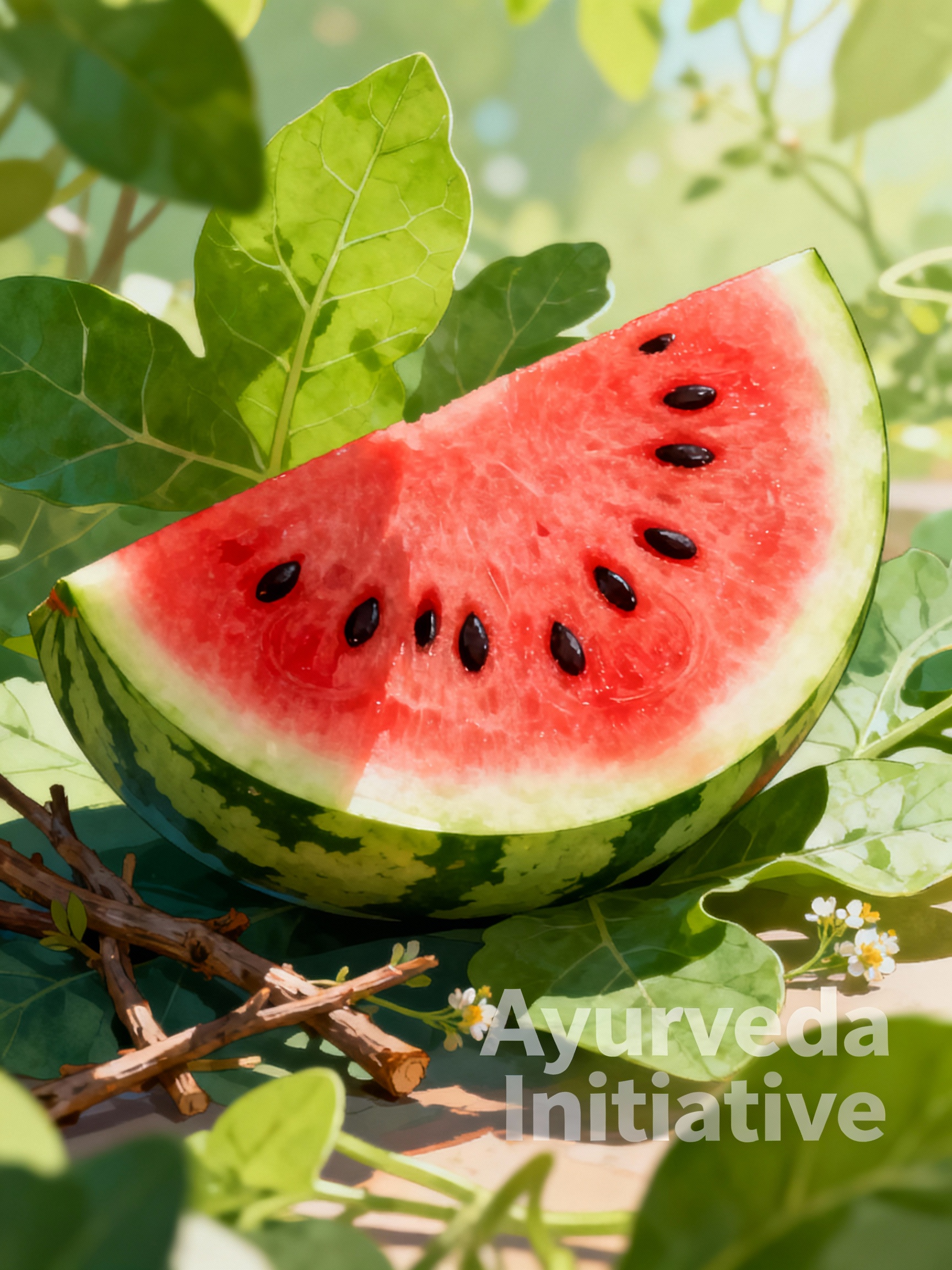
Watermelon: Ayurvedic Tips


Ayurvedic Tips — Watermelon | Ayurveda Initiative
Ayurvedic Tip

Watermelon — Ayurvedic tips for nutrition, seasons & safe use

Source: Ayurveda Initiative • Last reviewed:
Watermelon Ayurvedic Health Benefits

Ayurvedic Tips: Watermelon

Watermelon is a nutrient-dense fruit. It is an excellent source of vitamins A and C, helping protect cells from damage, supporting a healthy immune system, and promoting skin health.

Watermelon also helps maintain proper electrolyte balance and supports heart health.

Overview: Watermelon is a hydrating, nutrient-dense fruit rich in vitamins A and C, and electrolytes. In Ayurvedic terms it is considered naturally cooling and light — making it an excellent summer fruit when used mindfully.

Key benefits

  • Hydration: High water content helps maintain fluid and electrolyte balance.
  • Antioxidants: Contains vitamins A and C which support cellular health and skin vitality.
  • Cooling effect: Traditionally recommended to pacify excess heat (Pitta) when consumed appropriately.
  • Light digestion: Generally easy to digest when eaten fresh and in moderation.

Ayurvedic guidance (practical)

  • Best season: Summer and hot months — enjoy chilled slices during daytime to cool the body.
  • Dosha notes: Cooling by nature — helpful for Pitta imbalance; if you have a high Vata constitution, combine small portions with warming spices (e.g., a pinch of roasted cumin) to aid digestion.
  • When to avoid: Avoid large quantities on an empty stomach or late at night; large portions may disturb digestion for some people.
  • Food combinations: Preferably eat watermelon alone rather than mixing with heavy dairy or very sour foods. Traditional advice cautions against mixing watermelon and milk; observe how your body reacts.
  • Serving tip: Serve fresh, cut just before eating. Avoid leftover slices that have been sitting for long periods.

Simple Ayurvedic preparations

  • Fresh slices: Eat plain or with a light sprinkle of roasted cumin and black salt for digestion and mineral balance.
  • Infused water: Add thin watermelon slices to a jug of water with mint leaves for a cooling, digestive drink.
  • Salad: Combine cubes of watermelon with cucumber, a few mint leaves and a dash of lime — avoid heavy dressings.

Safety & notes

  • People with known allergies, diabetes, or specific health conditions should monitor portion sizes and blood sugar response.
  • Those on medication or with chronic health issues should consult a qualified healthcare practitioner or an Ayurvedic physician for personalised guidance.
  • This page provides general information only and is not a substitute for professional medical advice.

Disclaimer: The information on this page is for educational purposes. Please consult a qualified Ayurvedic practitioner or medical professional before making significant dietary changes. Consult a doctor for personalised medical advice.

Ayurvedic Tips for Winter

Ayurvedic Tips – Winter Hydration | Ayurveda Initiative

Ayurvedic Tips: Winter Hydration

Ayurvedic Winter Hydration Tips

In winter, people often forget to drink enough water because they don’t feel as thirsty. But drinking water is essential to keep the body hydrated, flush out toxins and support a strong immune system.

Warm water, soups and herbal teas are excellent Ayurvedic choices to stay hydrated and balanced during cold weather.

Why Winter Hydration Matters

Ayurveda explains that the cold season increases the Vata dosha, which can dry out the skin, lips and internal tissues. Adequate hydration helps nourish the body, maintain warmth and support immunity.

Ayurvedic Tips to Stay Hydrated in Winter

  • Drink warm or lukewarm water throughout the day to support digestion and circulation.
  • Have light, nourishing soups such as mung dal soup, veggie broth or rice gruel.
  • Include herbal teas like ginger, tulsi, cinnamon or fennel.
  • Avoid chilled water and cold beverages as they weaken digestion.
  • Eat warm, cooked meals with ghee to support internal lubrication.

Safety & Consultations

People with kidney issues, heart conditions or specific medical concerns should monitor fluid intake as per healthcare guidance.

Disclaimer: This content is for educational purposes. Please consult a qualified Ayurvedic practitioner or medical doctor for personalised health advice.

Source: www.ayurvedainitiative.com

Cumin Seeds Benefits

ЁЯМ┐ Health Tips: Benefits of Cumin Seeds (Jeera)

Cumin Seeds Health Benefits

Cumin seeds (Jeera) are packed with powerful natural antioxidants and anticancer properties. They may help relieve diarrhea, regulate blood sugar levels, support digestion, and boost overall immunity.

ЁЯМ▒ Powerful Antioxidants

Cumin seeds contain strong antioxidants that protect the body from free-radical damage.

ЁЯТз Helpful in Diarrhea

Traditionally used for digestive health, cumin may help reduce diarrhea symptoms naturally.

ЁЯй╕ Blood Sugar Control

Its natural compounds may support healthy glucose metabolism and stabilize blood sugar levels.

ЁЯТЫ Helps Lower Cholesterol

Regular intake of cumin may reduce LDL (bad cholesterol) and support overall heart health.

⚖️ Supports Weight Loss

Known for boosting metabolism and improving digestion, cumin may help in natural weight loss.

✔ Add 1 tsp roasted cumin powder daily in warm water, but consult a doctor if you are on medication.

Heart Health and Potassium

ЁЯТЪ Health is Wealth

Potassium helps balance sodium levels in the body and supports healthy blood pressure. Including Bananas, Oranges, Tomatoes, and Spinach in your daily diet improves cardiovascular health and naturally maintains blood pressure.

Bananas

Bananas

Rich in potassium, bananas help reduce sodium impact and support heart health.

Oranges

Oranges

A refreshing citrus rich in potassium and vitamin C for strong blood vessels.

Tomatoes

Tomatoes

Tomatoes contain potassium & lycopene, beneficial for heart and blood pressure.

Spinach

Spinach

Leafy greens like spinach provide high potassium and support blood circulation.

✔ Add one or more of these foods daily for natural blood pressure support.

Popular Posts

Blog Archive

Total Pageviews